Recruiting supermarket staff - Why hiring and retention are one question
- news
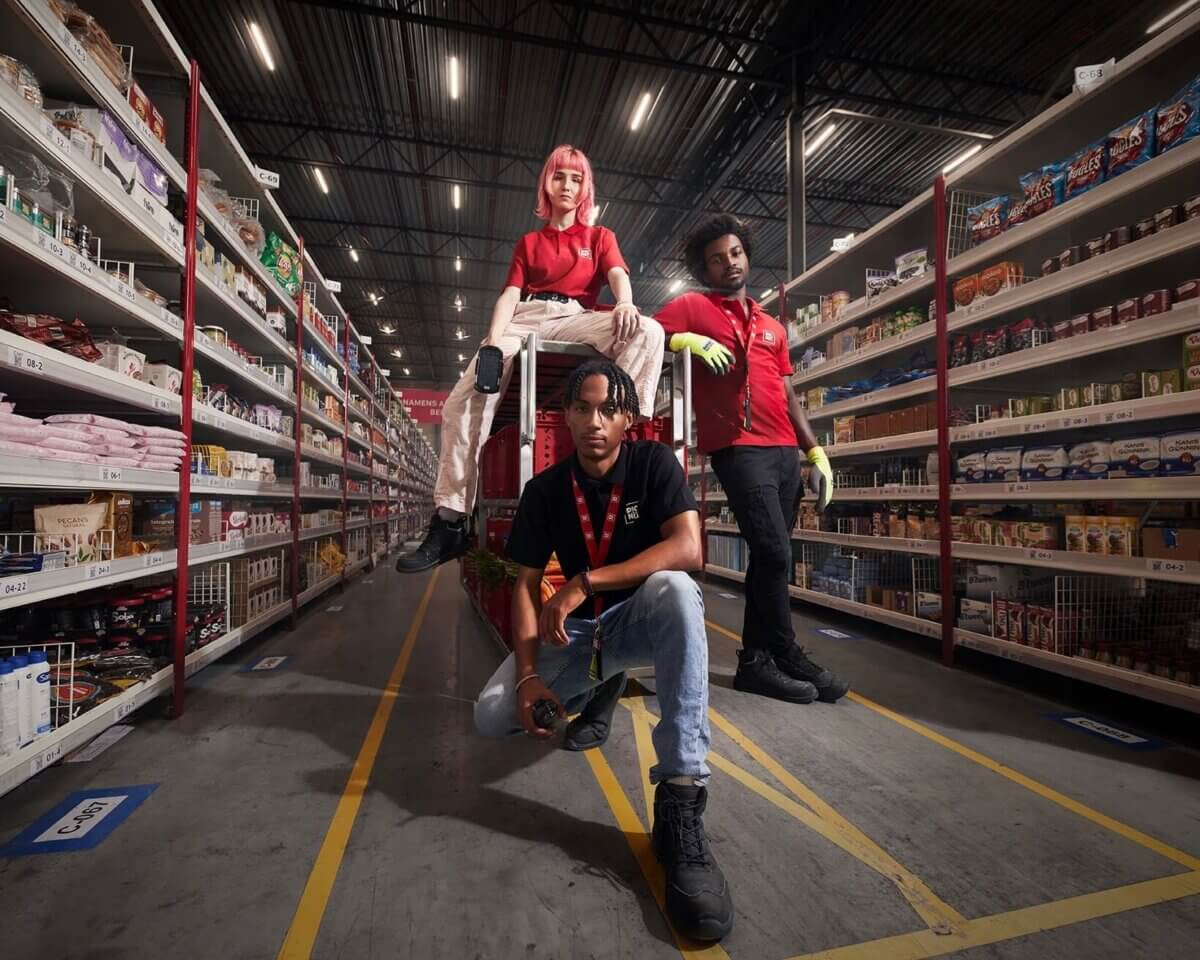
Recruiting supermarket staff is rarely a reach problem. Most chains and independent operators get applications, certainly for shelf stacking and checkout. The problem sits at the other end: a share of new hires is gone within months and the cycle starts again. You pay twice, three times, four times for the same vacancy.
That makes turnover something you cannot treat separately from recruitment. If you do not hold on to the people you bring in, every euro of visibility leaks straight out. Below, what the international research says about why frontline retail workers leave, and what that means for how you recruit.
Why does recruiting supermarket staff stall on turnover rather than reach?
McKinsey studied attrition among frontline workers in retail and hospitality and landed on an uncomfortable conclusion: at least half of them are considering leaving, and quit rates in retail are almost twice the national average across all sectors. The most striking figure is not about the staff but about their bosses. Of the managers, 63 percent said they planned to leave within three to six months, against 36 percent of non-managers.
For a supermarket that stings twice, because the store manager or team lead is exactly the person who onboards, schedules and motivates new people. If that chair changes hands every six months, your new hire lands in a team with nobody to turn to, however good your campaign is.
The tightness is not going away either. According to the Dutch employment agency UWV, 87 of 93 occupational groups were still tight or very tight in the first quarter of 2026. You are not only competing with the supermarket across the street, but with every employer chasing the same student, career switcher or part-timer.
Which number actually has to move?
Before you build anything, you want to know what you are trying to shift. In a supermarket organisation that is almost never “more applicants”. More often it is the share of people still working after ninety days, the time from vacancy to first shift, or the number of stores that are structurally understaffed.
Pin that down up front. What percentage of new hires is still there after three months? How many applications do you need per hire, and where do people drop out? Without a baseline you cannot show what it delivered, and you cannot build internal support for the next step. In retail that last part is often the real bottleneck: the budget sits with operations, the pain sits on the shop floor.
What actually makes supermarket staff stay or go?
In that same McKinsey research, flexibility tops the list of reasons to stay or leave. That is particular to retail, where in most other sectors pay ranks higher. Career development, health and well-being, compensation and meaningful work follow. For people under 35, career development weighs one and a half times as heavily as it does for those over 45.
Useful information, because it means your message about “a great team and a good atmosphere” adds nothing. Every supermarket says that. What does set you apart: being concrete about the schedule, about what you can grow into and how fast, and about who your manager will be.
One caveat: do not invent this from the outside in. An employee value proposition that holds up rests on three things: what the outside world says about you, what your own people say, and what the market offers. Ask your shelf stackers why they stayed. Those answers are more specific and more convincing than anything on the careers page.
How do you make recruiting supermarket staff a filter and not just a magnet?
This is where the biggest gain sits, and it is also the step most employers do not dare take. An honest picture of the work makes the wrong candidates drop out. That feels like a loss. It is a gain.
The research here is old and solid. In 1998, Jean Phillips published a meta-analysis in the Academy of Management Journal covering forty studies of realistic job previews, meaning what happens when candidates get an accurate picture of the job up front. The result: lower voluntary turnover, fewer drop-outs later in the process, and better performance from those who do come in. You lose candidates you would have lost in week three anyway, except then with onboarding costs attached.
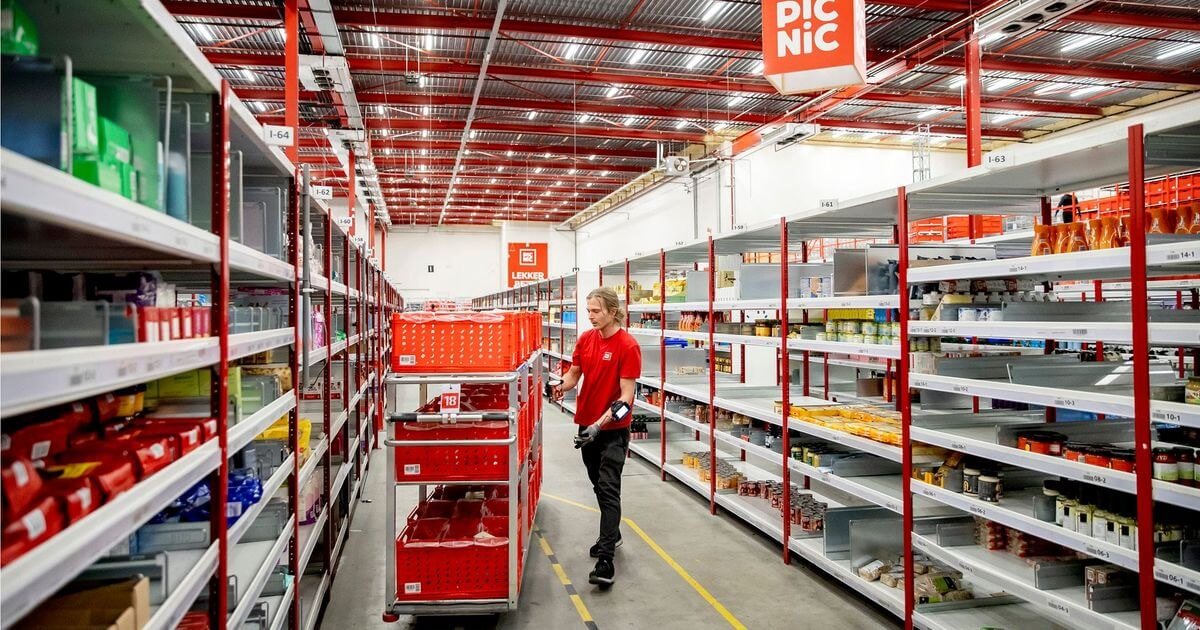
For a supermarket that is literally executable. Show how early the first shift starts. Film the fresh produce section being restocked on a Saturday morning. Let someone say it is physical work and why they still enjoy it. At Picnic we worked from exactly that idea: footage of the real job, told by the people doing it, instead of a polished promise. You do not claim a culture, you let people feel it.
Why is the answer sometimes the schedule rather than the campaign?
Not every problem is a campaign. The best evidence comes from a field experiment at Gap, run by researchers from UC Hastings, the University of Chicago and UNC between March 2015 and August 2016. Across 28 stores the schedule was made more stable: two weeks of advance notice, no on-call shifts, consistent shift structures and more hours for part-timers who wanted them. Nineteen stores got the full package, nine served as control.
Median sales in those stores rose by 7 percent and labour productivity by 5 percent, which came to 6.20 dollars in extra revenue per labour hour. No campaign, no new employer brand, just a better schedule. Good for the employee and good for the store at the same time.
The lesson is not that communication does not work. The lesson is that you first need to know whether you have a visibility problem or a reality problem. A sharp campaign on top of a bad schedule only speeds up the exit.
How do you hold on to a new hire through the first ninety days?
The candidate journey does not stop at the hire. That sounds like a slogan, but in retail it is concrete: the first shift, the first week and the first month decide whether someone stays. And that is exactly when recruitment usually stops paying attention.
So treat onboarding as part of recruitment, with its own content and its own metrics. A short video about day one. A buddy for every new hire. A conversation in week two instead of after probation. At Picnic the Picnic Academy is part of the outward story for that reason: you show not only that you are hiring, but what you do with people once they are in.
That works back to the front end too. An employee who stays becomes your best recruitment channel. In a sector where everyone is fishing in the same neighbourhood, that is not a side note. We see the same pattern in recruiting distribution center staff, where the first weeks matter just as much.
What can AI do here, and what can it not?
AI is excellent for scale. You can spin up ad variants per store, per audience, per time slot, and test what works. For a chain with two hundred locations that each sit in their own labour market, that is a serious accelerator.
Candidates use it too. A US survey by Gdoc.io among 500 job seekers in April 2026 found that 36 percent use AI in their job search, rising to nearly 47 percent among Gen Z. That matters for your careers website: if a model is summarising your information for a candidate, that information had better be findable, concrete and honest.
What AI is not for: faking people. Why generate a synthetic employee when you have hundreds on the payroll you could simply film? The real stories of your own people are the part no model can produce, and the part candidates believe.
How does MonFri approach this?
We start with the problem. Is the intake falling short, or is the back door wide open? Does it sit in one region, one job family, or in the first ninety days? We run a baseline on funnel, time to hire and turnover, and agree which number has to move. Only then do we decide whether the answer is a campaign, a better careers platform, a shorter application process or year-round content.
After that we build the employee value proposition on what is true internally, what talent actually wants and what the market does not offer. With footage from the shop floor, told by the people who work there. And with AI where it buys scale, not where it has to invent the substance.
Want to know how that plays out for your organisation? Have a look at our services, call 020 23 38 587 or email hi@mon-fri.com.


