Employer branding manufacturing - Why vacancies stay open while the job count falls
- news
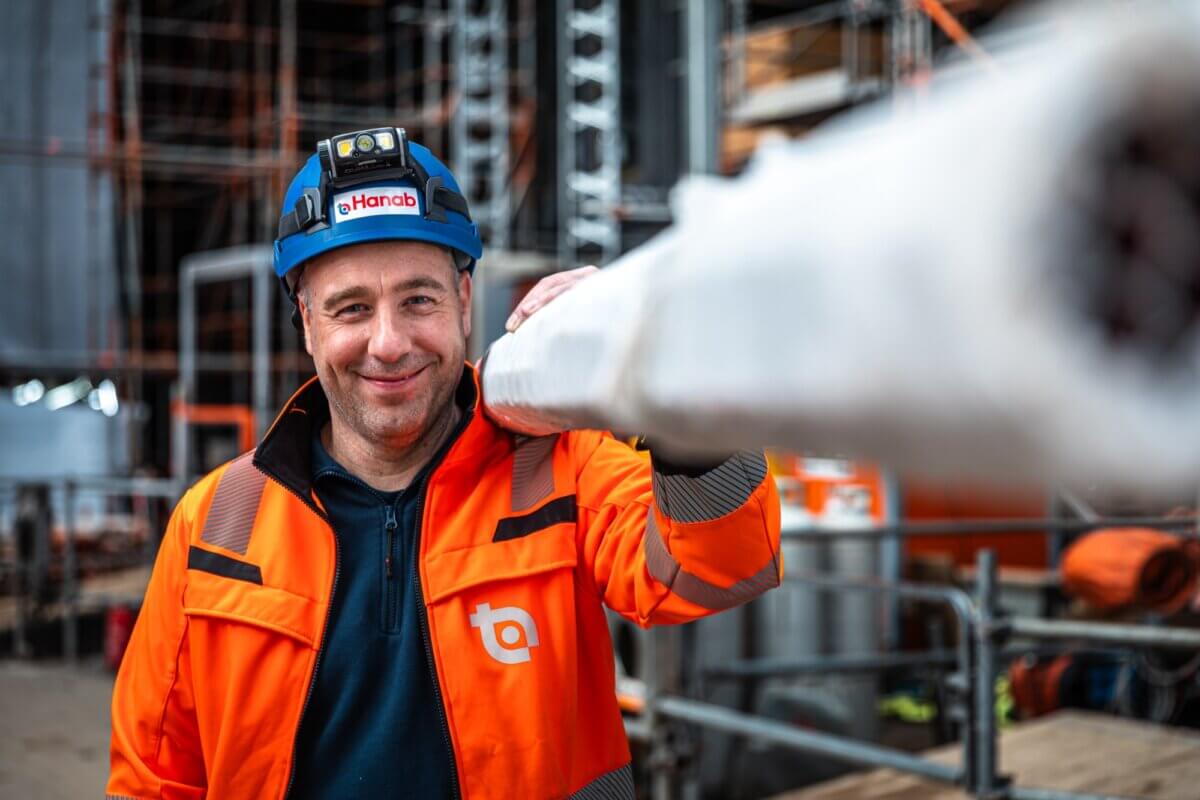
Manufacturing has an odd problem. The number of jobs is edging down, yet the vacancies that do exist stay open. Dutch labour agency UWV counted more than 30,000 open positions in industry in mid 2026, while employment in the same sector slipped slightly. Welders, CNC machinists, maintenance technicians, process engineers: exactly the roles production depends on are the hardest to fill. Employer branding for manufacturing is therefore not about buying more reach. It is about why the people you need are not looking at you.
That is not something a campaign wipes away. It is about what you actually offer, whether that matches life on the shop floor, and whether anyone can see it without applying first. Below: the numbers, what works internationally, and how to build an employee value proposition that holds up inside a factory.
Why do vacancies stay open while the job count falls?
The UWV figures show a sector moving in two directions at once. In March 2026 Dutch industry counted 779,000 jobs, slightly fewer than a year earlier, with another small decline expected. At the same time there were 30,400 open vacancies by mid 2026, and roughly a quarter of employers called staff shortages an obstacle to running the business.
A cooling market does not mean craftsmanship is suddenly abundant. It means supply and demand are finding each other worse than ever. You are not competing with “the labour market” in general, but with a handful of employers within twenty miles who want exactly the same welder.
Which is why every solid programme starts with a baseline. How many applicants per vacancy, where do they drop out, how long does a role stay open, how many of last year’s hires are still there? Without those numbers you cannot tell afterwards whether you solved something or simply made something.
What makes employer branding for manufacturing different from office work?
A production job comes home with you differently than a desk job. Shift patterns decide when you see your kids, commuting weighs heavier when you start at half past five, and physical load and safety are daily reality rather than a benefits line. Write over that and nobody believes you.
Employer branding is not product marketing. You buy a product, but a job becomes part of your life. Whatever your campaign promises gets delivered on Monday morning by a team leader on the floor, not by the communications department. If those two are not talking, your story leaks away within six months. Hence the rule: make content where the work happens, at the machine, with the people who stand there.
Do you actually know what your skilled people are looking for?
This is where the biggest gap sits for most industrial employers. McKinsey surveyed 2,154 frontline employees and 305 managers and found a systematic difference between what employees value and what employers assume they value. Opportunities to grow ranked first for employees, while employers leaned on job titles and recognition. Twelve percent of employees said they had access to external training, against thirty percent of employers who said they offered it. And seventeen percent had regular career conversations, against nearly forty percent of employers who believed they held them.
So plenty of industrial campaigns promise something skilled workers do not put first, while what they do want goes unmentioned. Deloitte and The Manufacturing Institute found that employees who can build the skills they will need are 2.7 times less likely to leave within twelve months. Assumptions are the most expensive ingredient here: interviews, exit conversations and behavioural data from your own funnel cost less than a campaign that lands beside the audience.
How do you build an employee value proposition that holds up?
At MonFri an employee value proposition rests on three pillars. Image: what the outside world says about you. Internal: what your own people say, including culture and how managers behave. Market: what the sector offers and who else is fighting for the same technician.
The distinctive part sits in the overlap. Something that is true inside but nobody wants is not a proposition. Something talent wants that is not true at your place gets repaid in turnover. And something true and wanted that your whole sector also shouts disappears into the noise. More on that in our article on the employee value proposition.
Culture belongs firmly in that middle pillar. Not because it looks good, but because your recruitment strategy has to match how things really work. Recruit against your own culture and you hire people who conclude after eight months that they are in the wrong company.
Why does “driven, ambitious, makers” convince nobody?
Because every employer says it. Values matter for how your organisation functions, but they rarely differentiate as a message. Put ten machine builders’ careers sites side by side, cover the logos, and you cannot tell them apart.
You do not claim culture, you let people feel it. Let a 24 year old technician explain why he stayed after his placement. Let a shift leader describe what went wrong when a line went down. Show don’t tell, and let the shop floor put it into words rather than the boardroom.
An honest picture also works as a filter. Show that you run three shifts and that the hall gets hot in summer, and the people who cannot handle that drop out by themselves. That saves you an expensive mis-hire. You want to be a magnet for the right talent, not for all talent.
What does international practice teach about employer branding for manufacturing?
Dutch scarcity is no exception. Deloitte and The Manufacturing Institute calculated that US manufacturing needs some 3.8 million new employees by 2033, of which roughly 1.9 million could go unfilled. Almost half of the manufacturers surveyed see apprenticeships, work-study programmes and internships as the most effective way to spark interest in the sector.
That matches how Germany has worked for decades, where the Ausbildung lets young people see a company from the inside before they choose. The lesson is not “start training people”, but: let people experience the work first and ask them to apply afterwards. A day on the floor often does more for your brand than three months of advertising.
The World Economic Forum and McKinsey reported in 2025 that companies treating frontline workers as an investment rather than a cost score 52 percent better on workforce stability. Earlier McKinsey research among nearly 13,000 workers in the US, UK and Canada found that Gen Z in manufacturing names coworkers (43 percent), meaningful work (41 percent) and flexibility (38 percent) as the main reasons to choose the sector. Pay came sixth.
How do you keep the people you just hired?
In industry, attracting and retaining are not two departments but one question. The same research found that 48 percent of Gen Z manufacturing employees intended to leave within three to six months, against 41 percent outside the sector, with lack of development as the main reason. McKinsey put the cost of a single frontline departure at roughly 52,000 dollars.
The candidate journey does not stop at the signature. What you promise has to be visible in week one: a buddy who has time, a learning path that goes somewhere, a team leader who checks in after a month. That is not HR luxury but your cheapest recruitment channel, because satisfied craftspeople bring you colleagues. And not every question needs a campaign: sometimes the answer is a shorter application process or a better job ad, as we described in our pieces on recruiting technicians and recruiting technicians in a tight labour market.
How does MonFri approach employer branding for manufacturing?
We start with the question. Are your vacancies not filling, or do people arrive fine but one in four leaves within the year? Does the market not know you, or does it know you wrongly? That answer decides whether we work on a proposition, a careers platform, content production or a campaign. Then we agree which number has to move, so you can show internally what it delivered.
Next we collect what is really going on: interviews on the shop floor, research among the talent you do not have yet, and a sharp look at what competitors promise the same people. Out of that comes an employee value proposition that holds up, plus the content to show it instead of claiming it. More about how we work is on our services page. Want to think through the recruitment question in your plant or installation business? Call 020 23 38 587 or email hi@mon-fri.com. We are happy to spend an hour on it before anything gets produced.


